
The Unclosed Door · RFK series
The World RFK Inherited
Part I of The Unclosed Door
1. Introduction: The Problem of Legacy and Premonition
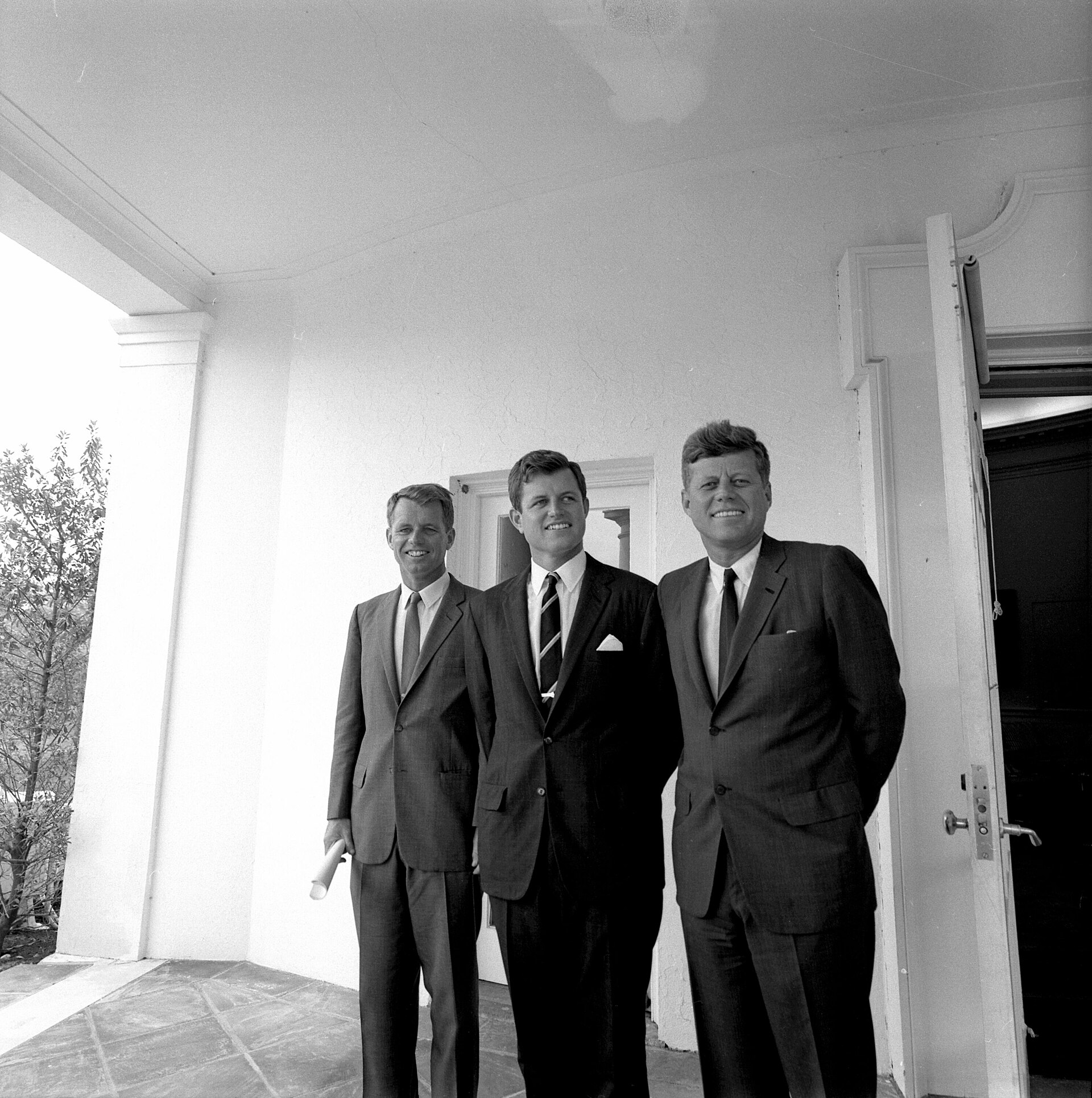

Before Robert Francis Kennedy was a martyr, he was a problem. Not merely to the enemies of progress, but to the political machine that birthed him. His assassination on June 5, 1968, was not the tragic punctuation to a doomed campaign; it was the decisive erasure of the last viable agent of democratic renewal within the American empire. To understand the necessity of his death—as perceived by the internal logics of empire—we must first understand the world he inherited: a world formed by privilege, altered by grief, and weaponized through contradiction.
This was a world spiraling between two tectonic contradictions: one, the American imperial project cloaked in Cold War liberalism; and two, the internal struggle between elite consolidation and the rising tide of democratic demands from below—civil rights, antiwar insurgency, Third World decolonization. The site of RFK’s emergence was a volatile pressure point where these contradictions could no longer be mediated. His assassination was not merely an ending, but a foreclosure—a targeted collapse of a potential future.
This section will situate RFK within that contradiction. It is not biography, but diagnosis.
2. Historical Context: The Crisis of Legitimacy (1945–1968)
The postwar consensus that shaped the American Century was already fissuring by the time RFK entered public life. Two irreconcilable ambitions drove American policy: global hegemony and domestic tranquility. The Truman Doctrine, NSC-68, and the erection of a permanent national security state after World War II enshrined the United States not merely as a nation among others, but as an empire without colonies—an illusion it could only maintain through covert warfare, public relations, and internal control mechanisms.
The CIA, founded in 1947, quickly became the empire’s unconscious, its repressed double: overthrowing democratically elected governments in Iran (1953) and Guatemala (1954), funding counterinsurgencies, and eventually orchestrating both domestic surveillance and psychological warfare programs such as MKUltra. Meanwhile, domestic institutions mouthed the vocabulary of democracy, but practiced the choreography of containment: against radicals, against Black liberation, against anti-imperialist voices, against the truth.
Robert Kennedy rose in this duality, first as a Cold Warrior, then—by 1968—as its most dangerous internal critic.
3. The Kennedy Dialectic: Fraternity and Divergence
It is impossible to discuss RFK’s political emergence without reckoning with John F. Kennedy’s presidency and assassination. JFK embodied the seductive modernity of a liberal empire: eloquent, technocratic, charismatic. But beneath the aesthetics of Camelot lay structural tensions: JFK’s conflict with the CIA after the Bay of Pigs, his attempt to dismantle their operational power, his resistance to full-scale military intervention in Vietnam, and—most fatally—his opposition to Israeli nuclear development at Dimona.
When JFK was murdered in 1963, RFK did not merely grieve—he changed. The brother who had once wiretapped Martin Luther King at Hoover’s request now began reading Camus, meeting with Caesar Chavez, and touring the Mississippi Delta. His transformation cannot be reduced to a personal evolution. It was a structural mutation: a Cold Warrior who began defecting toward the wretched of the earth.
RFK became a man suspended between institutions he once mastered and the people he was beginning to hear.
4. Fanon’s Ghost: The Colonizer Within
To properly interpret RFK’s trajectory, we invoke Frantz Fanon—not as a theorist of Third World insurgency alone, but as a guide to the psychic structures of empire. In The Wretched of the Earth, Fanon articulates a principle that illuminates RFK’s position: “the colonizer who accepts to be shaken up by the native is not merely an oddity. He has already ceased to be a colonizer.” RFK, in his final years, was a man who had ceased to be colonizer—but had not yet been accepted by the colonized.
He was a threshold figure—what Deleuze and Guattari might call a “body without organs,” detaching from state-function but not yet recoded as revolutionary. His encounters with poor Black Americans, with Chicano farmworkers, with Palestinian dispossession (indirectly, through Sirhan) became scenes of conceptual rupture. He was no longer manageable.
RFK was not assassinated because he was too powerful, but because he had begun to destabilize the very symbolic order that gave empire coherence.
5. Geopolitical Context: Palestine, Vietnam, and the Israeli Nexus
By 1968, the U.S. was engaged in a full-scale war in Vietnam and a covert alignment with Israel that would reach critical mass after the Six-Day War in 1967. RFK’s policy positions placed him at odds with both.
In 1962, as Attorney General, he attempted to register the American Zionist Council (precursor to AIPAC) as a foreign agent under FARA. The DOJ found substantial financial connections between the Israeli government and U.S.-based lobbying efforts. That investigation was shut down shortly after JFK’s death. In 1968, RFK’s ambiguous position on Israel—publicly supportive but privately cautious—made him a threat to the emerging neoconservative-Zionist alliance that would shape U.S. foreign policy post-1968.
Simultaneously, his opposition to the Vietnam War—combined with his capacity to attract both white working-class and Black voters—made him dangerous to the establishment figures planning for a Nixon restoration. He threatened to revive not just the New Deal coalition, but something newer: a multiracial, anti-imperialist democratic formation.
He had to be stopped.
6. The Stage is Set: Toward a Theater of Elimination
1968 was a year of ruptures. MLK was murdered in April. RFK in June. The Democratic National Convention would become a police riot in August. The United States, as RFK saw it, was no longer governable by consensus—it could only be governed through violence or transformed through risk.
RFK chose risk. Others chose containment.
As a conceptual figure, RFK in 1968 embodies what we might call the impossible subject: a reformer from within who reaches a critical moment where reform becomes revolution. The state, recognizing this, acts—not through due process, but elimination.
Closing Dramatic Schema (for the Playwright)
- Stage Motif: Split backdrop—one side the Ambassador Hotel kitchen pantry, the other the White House Situation Room. Superimpose video projections of Vietnam, Palestine, and urban riots.
- Character Archetypes Introduced:
- The Converted Enforcer: RFK, no longer master of the system, but haunted by what he enabled.
- The Bureaucratic Phantom: J. Edgar Hoover, never seen, only heard—a disembodied voice of preservation.
- The Exiled Witness: Sirhan Sirhan as colonial feedback loop—a consequence made into a cause.
- Thematic Axis: Empire cannot survive internal defection. To defect from empire is to die—or be made mad.
Source anchor appendix (Part I): framing/analysis; two claims need external sourcing —
- "RFK's 1962 attempt to register the American Zionist Council (AZC) under FARA" → [EXTERNAL — needs sourcing; zero coverage in all sixteen collected books]
- "JFK's Dimona confrontation with Ben-Gurion" → [EXTERNAL — needs sourcing]
- RFK's private JFK-assassination suspicions (referenced in later parts) → verified: {MD-PRE-2-¶020} · {MD-PRE-2-¶021} · {TA-C02-¶004} · {ST-C26-¶056}
More from the Chomsky Analytical Desk
- The Unclosed Door — Visual Index 23 November 2026
- Robert Kennedy’s Political Awakening 22 November 2026
- 1962 – RFK, AIPAC, and the Foreign Agent That Never Was 22 November 2026
- Sirhan Sirhan – The Manufactured Assassin 22 November 2026